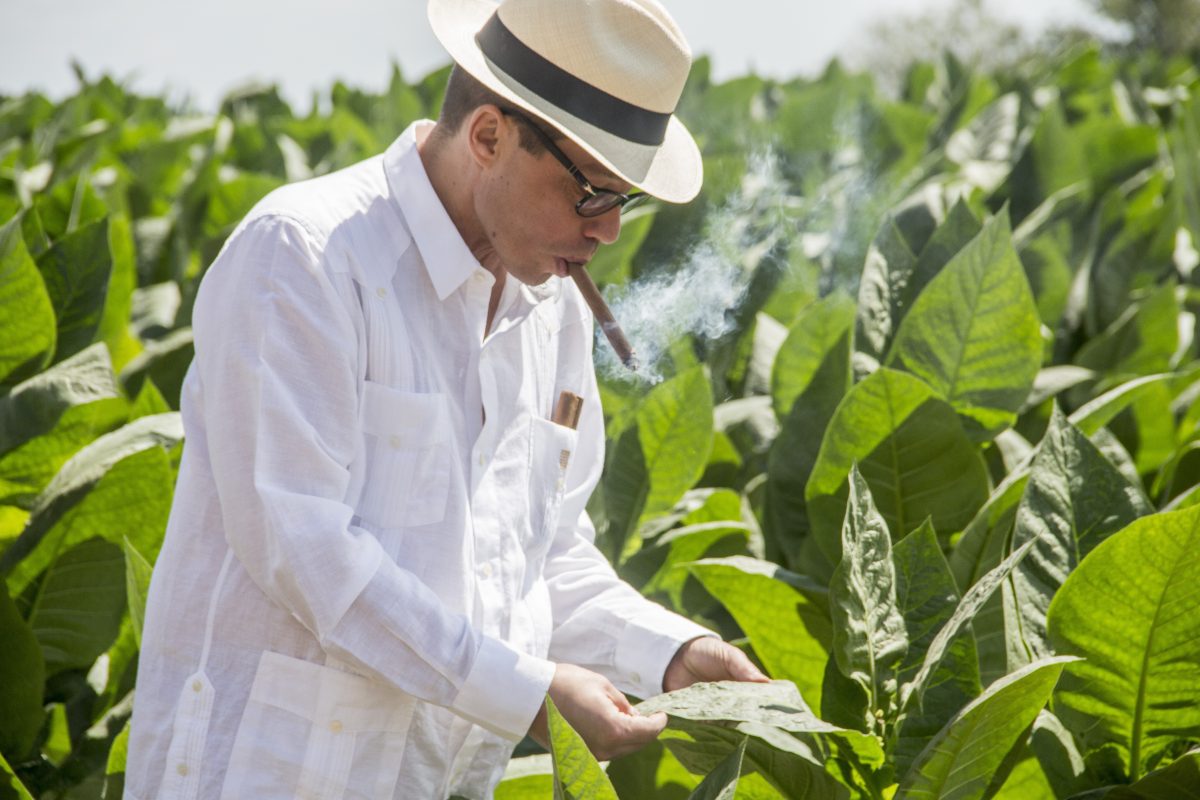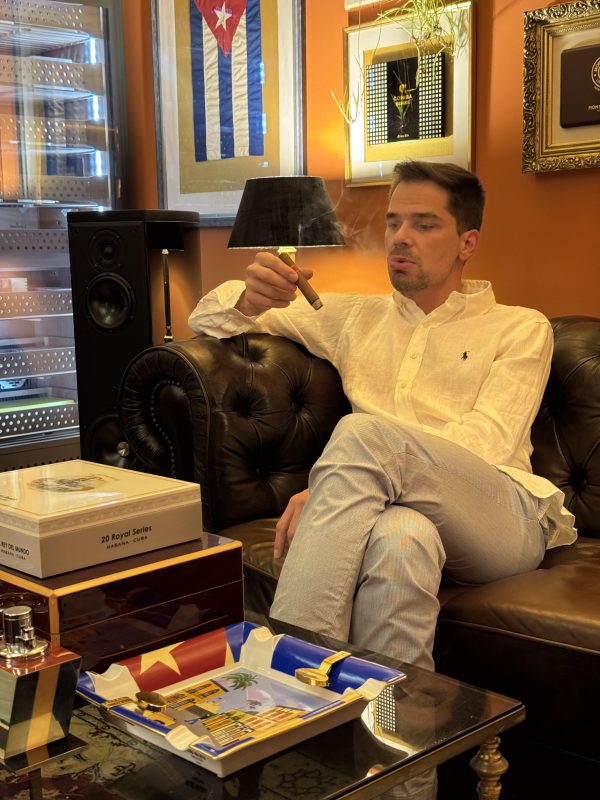


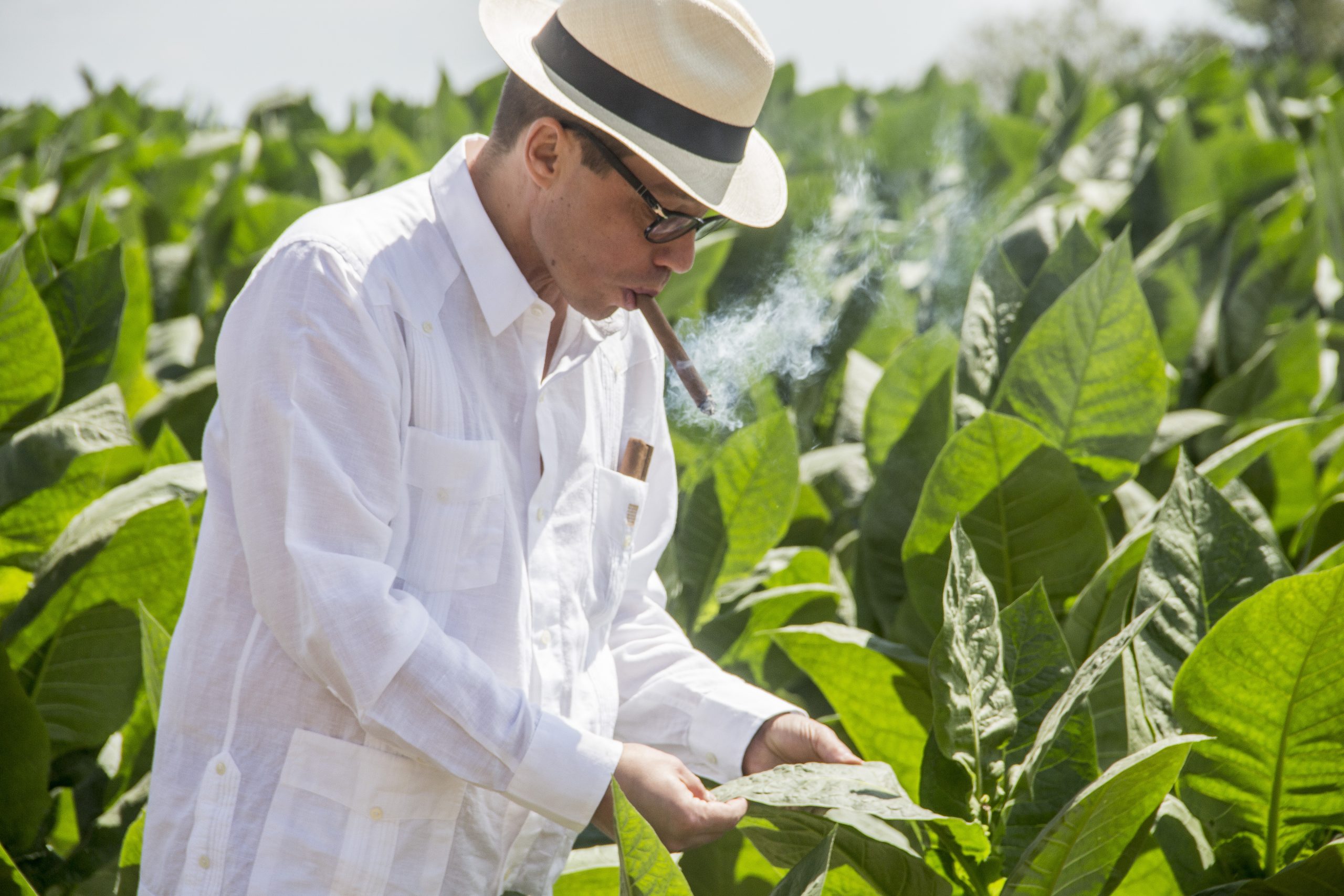
After just a few minutes of conversation with Zdravko Brkić, it becomes clear that cigars are much more than a hobby or profession for him. They are a way of meeting people, traveling the world, and collecting stories that will last a lifetime. Over the course of almost three decades, he has had the opportunity to meet the biggest names in the cigar industry, visit Cuba more than fifty times, participate in the development of the first regional cigar brand and staying true to a simple philosophy, a good cigar is never more important than good company.
His view of the world of cigars is free from excessive romanticism and fashion trends. He is not interested in endless discussions about aromas or the need to turn every cigar into a scientific experiment. Instead, he talks about the experience, the people and the moments that keep him coming back to this ritual again and again. You can read more exclusive interviews HERE.
In the new edition of our #CigarTalk series, we talked about the beginnings, Cuba, Smoke & Talk podcast, favorite cigars, and everything he's learned during his nearly thirty years in the world of premium cigars. Here's what we found out.
To begin with, could you briefly introduce yourself to our readers?
Zdravko Brkić: When I look back at my professional path, I actually realize that I have been lucky enough to do what I love my whole life. I entered the hospitality industry more than forty years ago, after that I worked in the hotel industry, then in the world premium wine and alcoholic beverages, and for the last almost thirty years my life has been closely tied to cigars.
At first it was purely a personal curiosity and pleasure, but very quickly it became my professional calling. Today I hold the position of Marketing Director of the company. Julieta doo., but what makes me happiest is the fact that thanks to cigars I have met an incredible number of people, traveled the world, and achieved many dreams that I could not have imagined as a young man.
When did your story with cigars begin?
Zdravko Brkić: It sounds like a cliché, but my story with cigars really started quite by accident. It was 1995 and I worked in a hotel Hyatt as Departmental Trainer u F&B sector. We have just introduced cigars into our offer, so My job was to study everything that could be found on the subject at the time in order to educate my colleagues.. Today, it's enough to open the Internet and find almost any information in a few seconds, but in the mid-nineties it looked completely different. Books were the only serious source of knowledge, and the Internet was just starting to exist. Paradoxically, back then I never even thought that one day I would be able to enjoy cigars.
One evening, a guest from the United States arrived at the hotel looking for cigar lounge. We didn't have it yet, but we had a bar that sold cigars. We talked about his Partagás to Lusitania, and after I recommended a few drinks that would go great with it, he was left completely confused. He asked me what cigar I usually smoked. When I replied that I had never smoked a cigar, he simply didn't believe me. Was is convinced that someone who knows so much about cigars must have years of experience behind them. In the end, he insisted that after the end of the shift I sit down with him and light my first cigar. That's how it all began.
“"Today, almost thirty years later, I can say that this is exactly Partagas Lusitania changed my whole life.” – Zdravko Brkić
Mr. Brkić says without reservation that Cuba remains for him the absolute benchmark when it comes to premium cigars in question. He believes that comparisons between Cuban cigars and those from the New World are often misplaced because, as he explains, certain climates have a character that is simply impossible to replicate. He compares this to top-quality Pinot Noir from Burgundy because there are excellent wines that can be produced all over the world, but there are terroirs whose uniqueness is inimitable.
He particularly highlights the regions of San Juan y Martínez and San Luis in the province of Pinar del Río, which he considers home to the best tobacco in the world. He does not dispute the quality of cigars from Nicaragua, the Dominican Republic or Honduras, but he believes that anyone who claims that they surpass Cuban tobacco is ignoring the decades of experience and continuity that Cuba has behind it. He says that a serious comparison is only possible when someone manages to repeat the same level of quality for generations.
He speaks from personal experience. He first visited Cuba in 2004 during the Habanos Festival, and has since visited it more than fifty times. Most of those trips were related to visits to plantations, factories, and tobacco harvests, which is why he experienced Cuba primarily through work for years. It was only last year, when he traveled with his wife to celebrate their twentieth wedding anniversary, that he had the opportunity to get to know the country for the first time as an ordinary tourist. It was this experience, he admits, that showed him a completely different side of the island, one in which he did not think about tobacco fermentation and cigar production, but simply enjoyed the place he has been returning to for decades.
Is there a particular cigar you remember? What made her memorable?
Zdravko Brkić: When someone asks me that, I always laugh because it's almost impossible to single out just one cigar. Over the years, there have been hundreds that have remained connected to certain people, trips, or moments that you never forget. I could write a whole book about it, let alone answer it in a few sentences.
However, there is one story that I always come back to. It was 2006. year, and we went to the Habanos Festival in Havana as a small team of friends. Aleksandar Nikolić Tony, Aleksandar Srećković Kubura and me. We applied to masterclass who led Simon Chase, a man who at that time was one of the greatest authorities in British, but also in the world cigar scenes. I had been reading his texts for years and knew how much I could learn from him.
Of course, like all good students, we arrived well before class started. While we were waiting, we saw Simon smoking a cigarette while drinking his morning coffee. Cohiba Lancero. We looked at each other, went straight to the store in the convention center, and bought a whole box. Lancer. They weren't sold individually, so we didn't have much choice. We sat down and lit them up like it was perfectly normal to smoke. Lancero at nine in the morning. Simon watched us for a few minutes, then came over to our table and asked how it was that such young people were smoking so early in the morning. Lancero. I could have tried to sound smart, but I told him the truth.
“"We saw you smoking." Lancero so we decided it must be a good choice. He started laughing. He sat down with us and said a line that I have never forgotten. I thought you were serious cigar connoisseurs. Actually you are just excellent copyists.”
After that, he spent almost half an hour talking to us. When the lecture started, he took us to the front row and told us to listen carefully now so that we could justify the fact that we were smoking. Lancero. It was one of those moments when you realize that the greatest authorities are not necessarily the most inaccessible people. Quite the opposite. I learned the most from people who were willing to sit at the same table, light a cigar, and share their experiences.
Later I had the opportunity to meet many other greats like Jimmy Ng, James Suckling, David Savona and numerous owners of the most famous cigar lounges and the factory. Each of them left a mark, but Simon Chase will always have a special place in my memory because he taught me that curiosity is just as important as knowledge.
Do you have a favorite brand of cigars?
“"If I could only smoke one cigar for the rest of my life, I would choose it without a second thought." Hoyo de Monterrey Double Corona.” – Zdravko Brkic
I've been saying this for years and I've never changed my mind. People often ask me why that particular cigar. Honestly, it's hard for me to give a rational answer. How do you explain why someone is your best friend? Or why you like a certain song more than all the others? There's just something that draws you in and you don't need to look for a logical explanation anymore.
It's the same with this cigar. With it, I always amazed by the balance. It never tries to be louder than it needs to be, never imposes its power, yet has a character that you recognize after just a few puffs. It's a cigar I've been coming back to for decades and has never disappointed me. Perhaps this is the best definition of a favorite cigar, the one you always return to, regardless of everything new you've tried in the meantime.
And what about formats? Do you have a favorite vitola?
“"Today the answer is very simple, Lancero.” – Zdravko Brkic
Zdravko Brkić: Maybe someone will think that the reason is that story with Simon Chase, and they are probably partly right. Every time I smoke Lancero, I remember that morning in Havana and the lesson I learned then. But it's not just about emotions. Lancero is a format that demands a little more attention from the smoker. It's not a cigar you'll light up on the sidelines or because you want to make an impression. If you smoke it right, it will reward you with incredible elegance and complexity.
I love and Perfecto formats, and when we talk about them, for me it's Davidoff absolute king.
On the other hand, I've never been a big fan of extremely thick cigars. I know they've been very popular in recent years, but they just don't suit me personally. Of course, there are exceptions, like certain Sixto of Placencia formats that would be a shame to skip, but in general I prefer elegance to a demonstration of greatness.
At the end of the day, the format should always serve the cigar, not the other way around. That's why I think that when all the trends pass, many will return to the classic formats that have never gone out of style.
Mr. Brkić does not believe in universal rules when it comes to pairing cigars and drinks. For him, the best combination always depends on the moment, mood, company and time of day. When he first tries a new cigar, he usually chooses plain water, which he drinks every day, because he wants a neutral reference point and the purest possible experience of the cigar itself.
He thinks similarly about coffee. Although he has tasted some of the most famous names in the coffee world over the years, including Kopi Luwak, for which he once traveled almost 800 kilometers to Zagreb's Ellis Café, today he says that a good, familiar cup of coffee is more important to him than the rarity or price of the beans.
Of the alcoholic beverages, he prefers sparkling wines. After twenty years of working in the wine industry, he prefers wines produced using the traditional method over Charmat, and equally appreciates top-quality French labels and quality domestic sparkling wines. He considers them the ideal companion for cigars because they refresh the palate and do not take over.
He adds with a smile that a glass of champagne with breakfast and a morning cigar will still make you a man of style, while the same scene with whiskey or a Negroni would probably elicit completely different reactions. He therefore sums up the entire pairing philosophy in two words: “bubbles & smoke”.
Are there any foods or gastronomic combinations that complement the flavors of cigars particularly well?
Zdravko Brkić: Of course they exist, but again we come to the same story, it all depends on the person.
Chocolate is always a safe choice. Fruit can also be a nice refresher between puffs, and richer foods often work great with stronger cigars.
“"But I've never liked to give the impression that cigars necessarily have to be accompanied by luxurious gastronomy. In fact, one of the combinations I often mention to people always makes them laugh.". Cheese burek and champagne. And I add the same thing every time. Try it and we'll talk later.” – Zdravko Brkić
I think the problem is that the cigar world often tries to make itself seem more serious than it actually is. As if you have to have caviar, crystal glasses and a walnut table with a cigar. I don't believe that. Life is much simpler. I divide everything into two categories; I like it or I don't like it. That's how I choose food, wine, cigars, but also people.
Nowadays, it's fashionable to analyze every cigar in the smallest detail. People talk about notes of cedar, different types of pepper, earth, leather, cocoa... If that makes someone happy, I have nothing against it. But for me, a completely different question is more important: Do I want to light that cigar again? If the answer is yes, then it's a good cigar. If not, all the analysis in the world won't change my opinion.
In the hospitality industry, I learned a sentence a long time ago that I have never forgotten:
“"Everyone has the right to be a farmer for their own money." – Zdravko Brkić
As long as their choice doesn't harm others, let everyone enjoy themselves in a way that makes them happy. That's the beauty of cigars. There is no one right way to enjoy them.
Mr. Brkić believes that the world of premium cigars is currently in a period of great change. The market today is equally affected by the availability of tobacco, the political situation in Cuba, taxes, customs duties and business decisions of large manufacturers, but when it comes to the cigars themselves, he believes that the end of a long-standing trend is slowly approaching.
In recent years, the market has been dominated by large-diameter cigars, often larger than ring gauge 60, but he personally believes that cigar lovers will gradually return to more elegant and classic formats like Corona or Lancer. He does not base this on market analysis, but on the experience he has gained over decades in the industry.
Trends, he admits, have never been much of an interest to him. Referring to Coco Chanel's famous saying that "fashion passes, but style remains", he points out that the same applies to cigars. While the exceptionally large vitolas are primarily a reflection of current fashion for him, he sees the Lancero as a timeless format that, just like other classics, will always find its place among true cigar lovers.
The Balkan cigar scene seems to be seriously growing in recent years. Is there a local project or brand that you particularly follow?
Zdravko Brkić: When I look at how the regional scene looked twenty years ago, and how it looks today, the difference is huge. In the past, we could only dream about the projects that exist today. A big step forward occurred with the appearance of regional editions of Cuban cigars for the Adriatic region, thanks to Camelot from Zagreb. After that, an exclusive Sancho Panza 109 for Serbia, and then numerous other projects that showed that the Balkans is no longer just a market that consumes cigars, but a region that actively participates in their story.
A special place in all this is occupied by Despot Cigars. I have been with this project from the very beginning and had the privilege of participating in its creation. The owner of the company Despot invited me to develop the project together with his sons, Jovan and Uglješ. Despot Cigars. This collaboration resulted in the series Despot J, Despot I i Despot Z, so I sometimes joke that over time I have become a kind of “adopted Despot”. I am especially happy that the story continues today through the third generation of the family, which has also received its own series, Despot V.
I have been with this project since the very beginning and I can say that I had the privilege of participating in its creation. What seemed like a slightly crazy idea in 2019, just two years later became the first regional cigar produced in Nicaragua.
It's interesting that back in 2002, when I founded Cigar Society Club, often said that my greatest professional dream would be to one day participate in creating my own blend and cigar format. I had no idea that this dream would actually come true.
That's why I often tell people today to be careful with their wishes. Sometimes they really do come true.
I am especially pleased that today we also have new regional projects like the Montenegrin brand. Tempus. What makes this community special is the fact that there is no sense of competition among us. On the contrary, we all support each other.
The world of cigars is perhaps one of the few hobbies where nationality, politics, religion or social status quickly become completely irrelevant. When several people sit at the same table and light a cigar, all that remains is the conversation and the shared experience. This is precisely why I believe that cigars connect people in a way that is increasingly rare today.
How did the idea for the podcast Smoke & Talk come about?
Zdravko Brkić: I think the answer actually lies in the generation I belong to. I grew up with radio and I still believe that radio was one of the most intimate media. People listened to shows to learn something, discover new music or hear an interesting conversation. The hosts were prepared, they knew what they were talking about and tried to convey something valuable to the listeners.
Today, I think podcasting is actually the radio of the 21st century. People listen to it while driving, traveling, walking or exercising. They don't necessarily have to look at the screen to be part of the conversation. Miloš Lukić and I talked for a long time about how we missed content that would be different from what is most often found on social media today. We didn't want another podcast where we would spend an hour discussing the nuances of wrappers, cedar notes or cigars that most viewers will never even have the chance to see. We were much more interested in people. Those who genuinely enjoy cigars, without having to prove anything to anyone. The idea was born quite spontaneously. We sat in the Cohiba Atmosphere Lounge, talking about the travels, people and experiences that cigars have brought to our lives. After a while, we started to notice that the people at the neighboring tables were talking less to each other and listening more to our stories. That's when we realized that these were exactly the conversations we wanted to record.
That's why we never wanted a studio atmosphere. No big headphones, no artificial lighting, no distracting set design. We shoot where we would sit anyway if there were no cameras. We wanted the audience to feel like they were sitting at the table with us.
I think that's exactly why Smoke & Talk is not a podcast just about cigars. It's a podcast about people who have something to say about cigars.
How important is a mentor in the world of cigars, or can everything be learned online these days?
“I think mentorship is one of the greatest assets a person can have, not only in the world of cigars but in life in general. I was lucky enough to learn from people who have built cigar culture for decades, and thanks to them I learned a lot that I never found in books. These weren’t lessons on how to properly light a cigar or recognize a certain flavor. These were life lessons that you can only learn by sitting at the same table with people who have experience.” – Zdravko Brkić
Later, I had the opportunity to mentor younger colleagues myself. It's interesting how I often mention my mentors with great respect, while many of those I tried to help today like to say that they learned everything on their own. I guess that's part of life's journey.
One of the few who still mentions me publicly today is Hrvoje Koštić. Maybe I was his mentor at one point, but after all the cigars we smoked together, I think it's much nicer to say that we are friends today. That's exactly what mentorship in the cigar world really is. There is no teacher-student relationship. There are people who spend time together, exchange experiences, and learn from each other through conversation. MoWill there be online learning today? Of course it can. The Internet has opened up access to information that we could not have imagined twenty or thirty years ago. However, it has also opened up space for a large number of people who very confidently share opinions that are often not backed by real experience. That is why I always advise you to choose carefully who you learn from. Personally, I have never been a fan of online certificates and virtual cigar education. Someone gives you a few hours of lectures on a screen, sends you a diploma and calls it mentoring. For me, that's not the same. A true mentor is not someone who just passes on information to you. A true mentor is someone who will recognize you on the street a year later, sit down with you, light a cigar and continue the conversation where you left off last time. That's where the greatest value of this hobby lies.
Do you prefer a straight cut, V-cut or punch?
“If I were to answer completely honestly, I would say that I usually use whatever I have on hand at the time. If we are on the road or in a group, I don't think too much about it. But if I had to choose only one way to cut for the rest of my life, I would always choose a straight cut, with scissors.” – Zdravko Brkić
How important are a quality cutter, lighter and case? Do you have favorite manufacturers or models?
Zdravko Brkić: I think the importance of accessories is often overstated. Of course, a quality tool is more comfortable to use, but I don't believe that an expensive cutter will make you a bigger cigar lover.
The most important thing for me in a cutter is that it is simply sharp. If it cuts well, it has served its purpose. I don't need complicated mechanisms or luxurious materials.
I think similarly when it comes to lighters. Personally, I always prefer to choose soft flamee than pench. If I already use torch, then let it be single flame. I've never understood the fascination with lighters with three or four flames. To me they seem more like a tool from a body shop than something that belongs to the ritual of enjoying a cigar.
And matches...I always single them out. Matches and cedar have a romance that no lighter can replace. They are little things that remind us of a time when the whole ritual was slower and somehow more natural.
When it comes to cases, I admit that I have a small weakness. I buy them much more often than I really need. Over time, I learned that the most important thing is not whose name is written on the case, but what kind of leather it is made of. There is one in Novi Sad Manual, a house that I greatly appreciate because of the way they process leather. During the pandemic, they developed several models of cases made of naturally tanned leather, without aggressive chemicals and artificial coatings. Such leather breathes, absorbs moisture from the humidor and later helps keep the cigar in excellent condition.
These are details that you may not notice right away, but they make a big difference in the long run.
Finally, can you recommend one cigar under ten euros that every cigar lover should try?
“"If I had to make a very short list, it would definitely include Villa Zamorano Danlí Robusto. I think it offers fantastic value for money and I have been recommending it for years to people who want to get a lot for a reasonable price. I would also like to point out Joya de Nicaragua Original Clásico, whether in Robusto or Churchill format.” – Zdravko Brkić
To me she is like mountain air. It's not aggressive, it's not pushy and it doesn't try to impress with power. It's elegant, balanced and that's why I always come back to it. I think it will be equally appreciated by someone who is just entering the world of cigars and an experienced smoker looking for an everyday cigar.
And finally, what advice would you give to someone who is just entering the world of cigars?
“Research. And then research again. And then keep researching.” – Zdravko Brkić
Don't let social media, online lists, or people who claim there is only one right choice shape your taste. There is no universal truth in the world of cigars. What is the perfect cigar for me may mean nothing to someone else, and that is the beauty of this hobby. Try as many different manufacturers, different countries, different formats, and strengths as possible. Don't be afraid to make mistakes. Sometimes you will buy a cigar that won't excite you, but it will help you better understand the one that will.
The most important thing is to develop your own taste. The moment you stop smoking cigars because others think they're good and start choosing ones that you genuinely like, that's when the real enjoyment begins. It is perhaps the most valuable lesson I have learned over all these years.
A conversation with Mr. Zdravko Brkić once again confirms that cigars have never been just a matter of tobacco, format or country of origin. They are, above all, stories. Stories about the people we meet, the places we visit and the moments we return to years later. Perhaps that is why during this conversation he almost never tried to explain a cigar through notes of cedar, pepper or leather. He much preferred to talk about friendships, mentors, Cuba, travels and the conversations that arise when several people sit at the same table.
In a time when almost everything is trying to speed up, a cigar remains one of the few rituals that forces us to slow down. And that, it seems, is exactly what Zdravko Brkić is trying to say all along. Think less about the rules, and enjoy the moment more. Because, as he himself said during our conversation:
“Fashion passes, style remains. The same goes for cigars.” – Zdravko Brkić
Dear Mr. Brkić, thank you for this pleasant conversation and we wish you much luck in the future!
Photos: Zdravko Brkić
Source: DART.hr